
Our ADIF file containing all of our logged contacts for this contest is available HERE.
Carl, John, and I really, REALLY enjoy Field Day. It’s a great opportunity to showcase ham radio and to pull out “all the toys.” Contest-wise, it’s as serious as you want it to be. The three of us have a small competitive streak. We don’t expect to win our category, we don’t get bent out of shape when things go wrong, but we are earnest in making the most out of our station, our circumstances, and ourselves as operators.
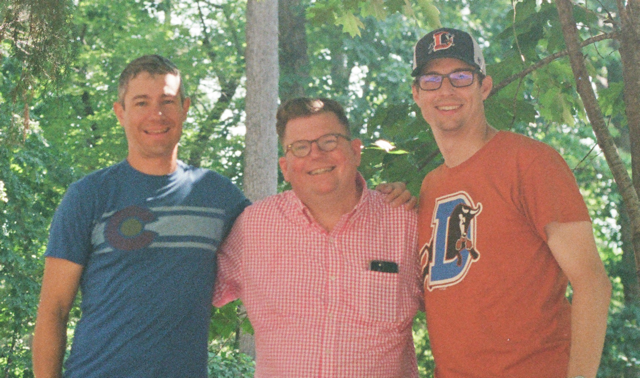 Field Day 2025 at Morrow Mountain State Park in North Carolina. Photo courtesy
John K4EB, 35mm. L-R: John K4EB, Carl W8WZ, Brantley K4CBW
Field Day 2025 at Morrow Mountain State Park in North Carolina. Photo courtesy
John K4EB, 35mm. L-R: John K4EB, Carl W8WZ, Brantley K4CBW
The year began with the three of us brainstorming a way to participate in another Field Day, together. In Field Days prior, we participated in a larger multi-station Field Day that competed in the 6A, 7A, and 8A categories. During these years, John was a 40m phone band captain and Carl or I were the 20m/80m CW band captain. We colocated our phone and CW stations under one popup canopy for 24 hours of fun. In 2024, we participated in a Field Day operation that placed #7 in the country. The 40m phone and 20m/80m CW stations contributed 1700+ (933 + ?) QSOs. In 2025, we decided to strike out on our own to ensure we could continue to operate in this manner. We wanted to build on those numbers and make memories together, even if competing in a smaller category.
Preparations
Preparations were made in the months leading up to Field Day. John and I scouted Morrow Mountain during the Winter Field Day weekend in January and determined it to be an ideal location: low on RF noise, high on creature comforts. Additionally, every QSO would be in a state park and count for Parks on the Air.
A few months later, John spearheaded the building of a baffle for the Honda generator. Hondas are usually quiet, but this baffle added a little more sound dampening and would shield the generator from any potential rain. This generator has a very good carbon monoxide sensor as we found out when it stopped due to insufficient exhaust porting. We cut a larger whole in our foam baffle, positioned the exhaust port closer to the exhaust hole, and had smooth operating the rest of the weekend.
Closer to the date, we had a Zoom call where we finalized equipment assignments, and most importantly, the menu. Carl graciously offered to handle most of the meals and received no objection from John or myself. Not every Field Day operation has a sommelier from New Orleans on staff.
Carl and I arrived at Morrow Mountain State Park on Thursday, June 26th to begin preparations. Carl arrived having traveled from New Orleans, making stops for POTA along the way. Arriving the day before gave us time to think through the weekend without being forced into action immediately upon arrival. Field Day rules stipulate the following:
3.3. No class A or B station may begin its set-up earlier than 0000 UTC on the Friday (Thursday afternoon or evening local time) preceding the Field Day period. Cumulative set-up time shall not exceed a total of 24 hours.
After unloading the vehicles, we assessed our needs for the weekend and went into the closest town to pick up provisions. We treated ourselves to the local cuisine and made a large grocery run before heading back to the cabin. Upon our return, we were surprised to find the park’s main gate locked! Fortunately I was in closed toed shoes and jogged two miles from the gate to the cabin to pick up a second vehicle so that we could shuttle the groceries across the gate and return to the cabin. The soupy ice cream received a reprieve that Thursday night.
The Station
Carl and I brought our FTDX10 radios. These radios have roofing filters and are very tolerant of nearby RF energy. We used them together at prior Field Days and were confident that they would serve us well at Morrow Mountain State Park. We set one as a CW station and the other as a phone station. Carl and I would take turns at CW, John would operate phone, and Carl or I could fill in at the phone station when John needed to step away. Operator verasatitliy is nice, especially when time is needed for meals or rest.
On the Friday before Field Day, Set Up Day, we hung our antennas. We put Carl’s MyAntennas endfed half wave antenna between two trees in a picture-perfect inverted-L configuration. The antenna hung completely in free space, had a perfect 90° angle, and had perfect (to our eye) proportions of horizontal and vertical polarization.
Off the null of the EFHW, we put up John’s 40m dipole. Flat-topping around 40-50 feet, this antenna would stay on 40 meters for the duration of Field Day. We would switch antennas between the CW and phone positions, but would always have a radio on 40 meters since it is a 24-hour “money band.”
Operating
Carl and I operated primarily CW, John primarily phone. John and I attempted to operate FT4 and FT8 from the phone station Saturday evening, but ran into software and logging difficulties that forced us back to sideband.
John handled the satellite contacts for us. On a weekend where the satellites are crowded, it’s good to have an experienced operator to navigate those frequencies. John makes it look easy.
Bonus Points and Crossband Repeat
In order to scratch our competitive itch, we aimed to achieve as many Field Day bonus points as possible. Some were unattainable due to the lack of a Get on the Air (GOTA) station. Our spartan, 3-man Field Day operation made no accomodations for a GOTA station. Therefore, we tried to leave as few remaining bonus points on the table as possible.
One of the more time-consuming Field Day activities is traffic passing. In the best case, this means checking into a local 2 meter traffic net and originating some messages. The closest 2m repeater hosting traffic nets was in Greensboro. We were too far away to reach the repeater with my vehicle-mounted 50W mobile rig. This meant potentially pulling two of our three operators away from the two HF stations, positioning one in the parking lot at the top of Morrow Mountain, positioning the other at our Field Day site (cabin), and relaying messages into the 2 meter traffice net. Field Day rules require that messages originate from the Field Day site (in our case, the cabin).
John had an idea to park the dual-band 50W mobile at the top of Morrow Mountain and use the crossband repeat feature as an “automatic relay”. We could use our HT from the cabin to reach the mobile station on 70cm which would then repeat our signal on 2m to the traffic net. John and I positioned the vehicle early Saturday afternoon and verified communications back to the cabin. When it was time for the traffic net, Carl went to the cabin’s back porch and began originating traffic. After some confusion with the net control operator, he was successful. The Kenwood TM-V71A crossband repeat feature has a long, hard-coded PTT tail. The net control operator patiently worked us through the long PTT tail as we relayed our messages.
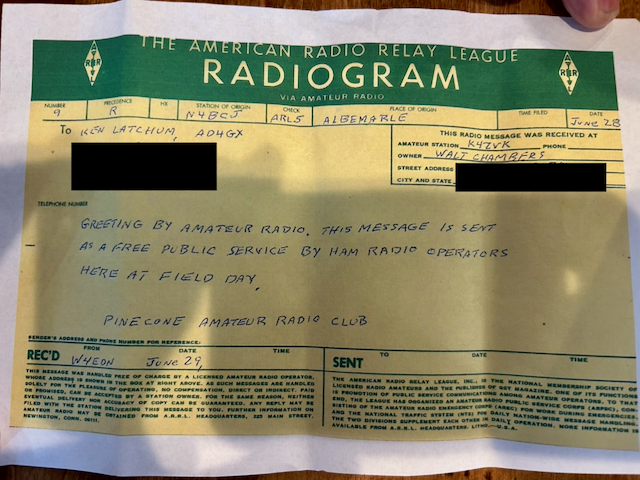 Field Day radiogram originating from the Morrow Mountain State Park cabin.
Winding Down
When Field Day ended at 2pm Eastern, a collective sigh was heaved. We were very pleased with our effort. Naps dotted the afternoon as we started taking down antennas and packing up radios. Moving slow felt good. The day ended with a feast. Steaks and all the fixins were the celebratory meal capping the end of our Field Day weekend. We would finish packing up and would depart the following Monday morning. It was nice to not be in a rush on Sunday and have time to celebrate our effort, reflect on successes and potential improvements, and begin to think about Field Day 2026.
Results
Our ADIF file for this event is availble for download.
The December issue of QST is always one of my favorites and is up there with the antenna issue. The December issue of course includes Field Day results. Since this was our first go as a three man operation, I was eager to see how we compared to other operations.
In a nutshell, we did very well. There’s always room for improvement, but we have a lot to be proud of. The highlights:
Summary by Final Score (excluding check logs):
- #195 out of 4,210 (95.37% percentile) overall
- #26 out of 286 (90.91% percentile) in our category
- #11 out of 154 (92.86% percentile) amongst other 3-person stations
- #7 out of 143 (95.10% percentile) in North Carolina
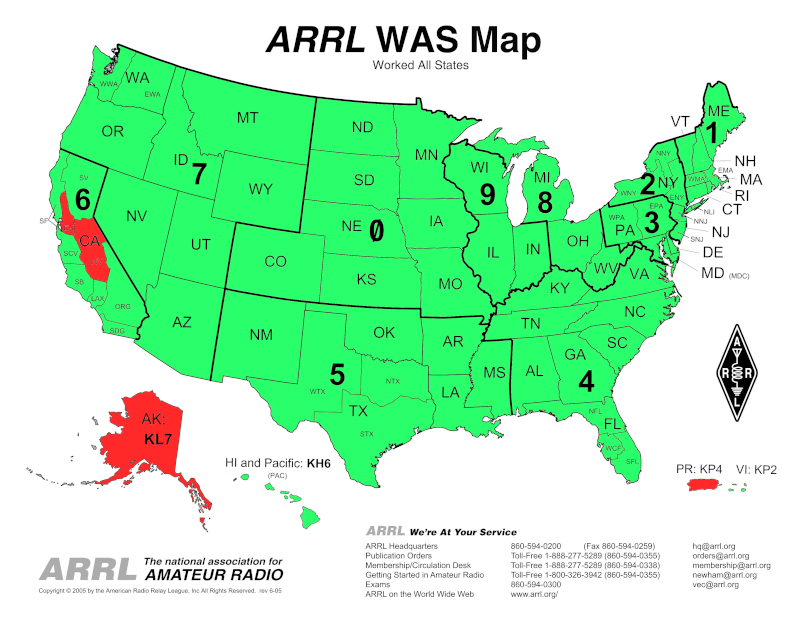
We worked 77/85 (90.6%) of W/VE (American & Canadian) sections. The elusive sections were:
- Alaska (AK)
- East Bay (EB), California
- San Joaqin Valley (SJV), California
- Puerto Rico (PR)
- Alberta (AB), Canada
- Saskatchewan (SK), Canada
- Territories (TER), Canada
- Newfoundland and Labrador (NL), Canada
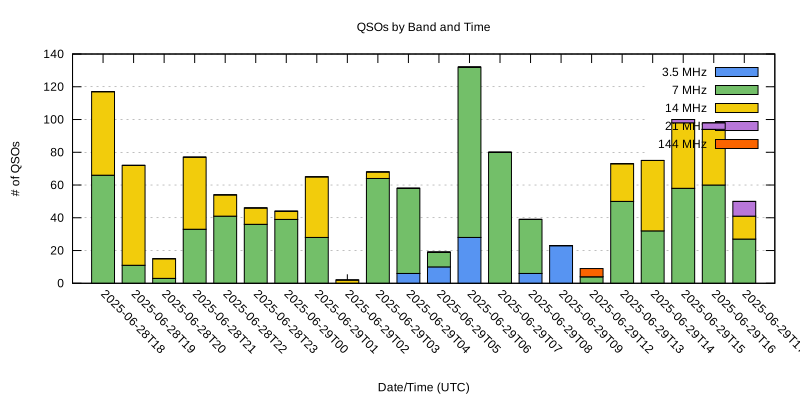
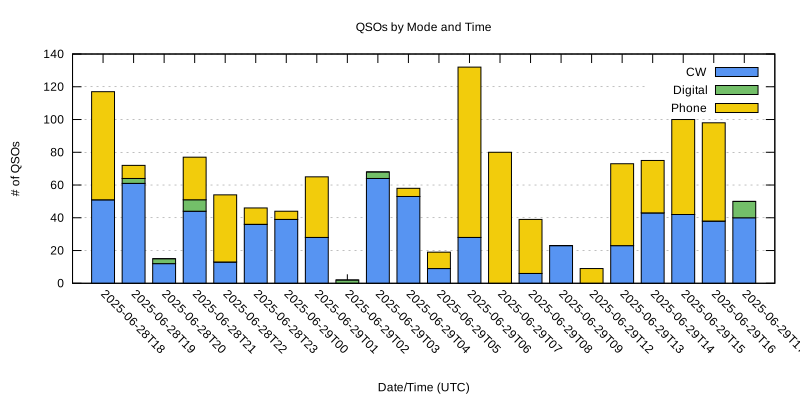
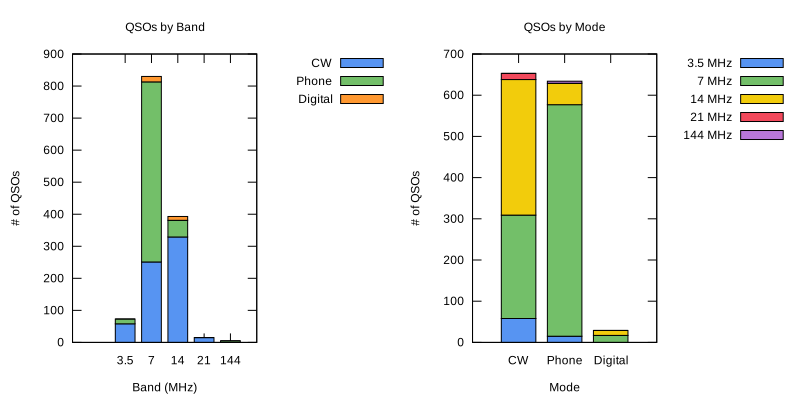
Band & Mode Statistics
| Band | CW | Phone | Digital | Total |
|---|---|---|---|---|
| 3.5 | 58 | 15 | 73 | |
| 7 | 251 | 562 | 17 | 830 |
| 14 | 329 | 52 | 12 | 393 |
| 21 | 15 | 15 | ||
| 144 | 5 | 5 | ||
| Total | 653 | 634 | 29 | 1316 |
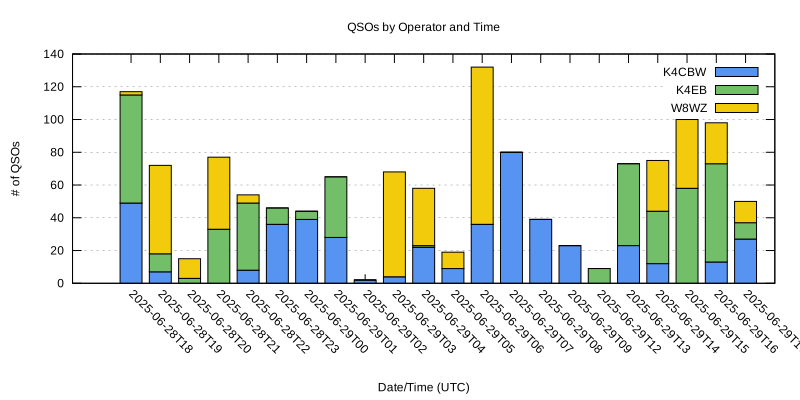
Hourly Statistics
Notice our sleeping and eating patterns.